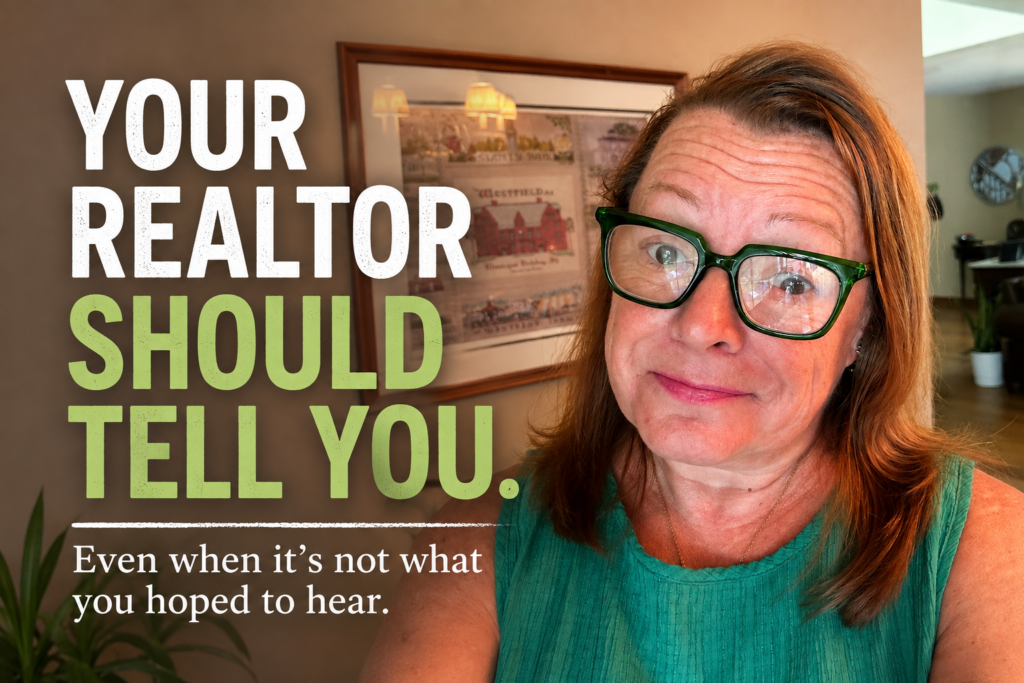
There are things homeowners want to hear when they’re getting ready to sell. Your house looks great. You don’t need to do a thing. Of course it’s worth what you’re hoping it’s worth. And yes, that improvement you spent $30,000 on absolutely added $30,000 to the value. Sometimes those things are even true. Sometimes they’re not.
After nearly 40 years of selling real estate, I’ve learned that one of the most important parts of my job happens before the sign ever goes in the yard. It’s having honest conversations with sellers about what will actually help them get where they want to go.
And apparently, somewhere along the way, this happened to me:
I used to be a cool Realtor. Now I have opinions about paint colors, overpricing, and whether buyers are definitely going to notice that thing you’re hoping they won’t notice. But there’s a reason for it.
Your home’s value isn’t based on what you need from the sale
This can be one of the hardest conversations to have.
Maybe you need a certain amount of equity for your next house. Maybe you’ve calculated what you spent on improvements. Maybe your neighbor sold for a certain amount, and you’re convinced your house is better. All of those things matter to you. They just don’t determine market value.
Buyers are comparing your home to the other choices available to them. Recent sales, current competition, condition, location, and the market itself all play a role. My job is to help you understand where your house fits into that picture—not simply choose a number that sounds good.
Preparation doesn’t have to mean renovation
This is another place where sellers can go too far in either direction. Some people think they need a new kitchen, new bathrooms, and $20,000 worth of work before they can put their house on the market. Others want to sell “as-is” and assume that means there’s no reason to prepare at all. Usually, the right answer is somewhere in between.
Sometimes I really am going to tell you to paint that room. I may suggest moving half the furniture out of the living room or finally dealing with the little repair you’ve stopped noticing because you’ve lived with it for eight years. But I may also tell you not to replace something.
The goal isn’t to make your house perfect. It’s to figure out where your time and money will actually make a difference to buyers—and where it won’t. We want the home to be prepared so that your home shines when it hits the market.
The first week on the market matters
One of the reasons I’m careful about pricing and preparation is that you don’t get to recreate your first week on the market. That’s when the buyers who have already been watching and waiting see your house for the first time. If the price and presentation are right, that early attention can work in your favor.
If they’re not, reducing the price three weeks later doesn’t put you back in the same position. You’re now a house buyers have already seen sitting on the market. That’s why I’d rather have the uncomfortable pricing conversation before we list than the uncomfortable price-reduction conversation afterward.
The highest offer isn’t automatically the best offer
When an offer comes in, the first thing most sellers look at is the price. I look at the rest of it.
Financing. Contingencies. Deposit. Closing date. Inspection terms. Appraisal considerations. The buyer’s overall ability to get from offer to closing. A higher number can be wonderful. A higher number attached to shaky terms may not be.
My job is to help you understand what you’re actually being offered so you can make the decision that’s best for you.
You should know what your Realtor really thinks
You don’t have to agree with every recommendation your agent makes. It’s your house, your money, and ultimately your decision. But you should know what your agent really thinks. If I believe you’re about to spend money you don’t need to spend, I’ll tell you. If I think something needs attention before we list, I’ll tell you. If I think an offer deserves a closer look—or isn’t as good as it appears at first glance—I’ll tell you that too.
Because after all these years, this may be the best way I know to describe my job:
I want to give you the same advice I’d want if it were my house.
That may not always be the easiest advice to hear. But it will always be honest.
FAQs for Home Sellers
Should I make repairs before selling my house?
Not necessarily. Some repairs or improvements can make your home more appealing to buyers, while others may cost more than they’re worth. Before spending money, I recommend having your Realtor walk through the property with you and help prioritize what matters, what doesn’t, and what buyers in your market are likely to notice.
How do I know what my house is worth?
Your home’s market value is based on factors including recent comparable sales, current competition, condition, location and buyer demand. Online estimates can be a useful starting point, but they can’t see your home or understand all of the details that can affect its value.
Should I price my house high so I have room to negotiate?
Usually, that’s not the strategy I recommend. The first days on the market are valuable because that’s when your listing reaches buyers who have already been watching for a home like yours. Starting too high can cause those buyers to pass it by rather than negotiate.
Is the highest offer always the best offer?
No. Price matters, but so do financing, contingencies, deposits, inspections, appraisal terms, closing dates and the buyer’s ability to complete the purchase. A strong offer is the combination of price and terms that best meets your goals.
Can I sell my house as-is?
Yes. Selling as-is doesn’t necessarily mean doing nothing before listing, though. Cleaning, decluttering and making a few inexpensive improvements may still help your home show better without taking on major renovations.
Thinking about selling a home in Western Massachusetts or Northwestern Connecticut?
I’m Lesley Lambert, REALTOR® and SRES® with Park Square Realty. I’ve been helping people buy and sell homes since 1988, and I’d be happy to talk through what selling might look like for you—even if you’re still in the “just thinking about it” stage.
Senior Moves Made Simple with The Second Act Move Plan: https://westernmahomes.net/secondactmove/
More Home Selling Preparation here: https://westernmahomes.net/getting-your-home-ready-to-sell-in-western-massachusetts-northwestern-connecticut/


Leave a Reply