• Skip to main content
  • Skip to primary sidebar
  • Skip to footer

Western Mass Homes Lesley Lambert

  • Neighborhoods
    • Living in Westfield, Massachusetts
      • Stoney Hill Condominiums, Westfield, MA
      • Ridgecrest Area of Westfield, MA 01085
    • Living in Southwick, Massachusetts
  • Selling
    • Selling Your Home
  • Blog
  • About
  • Contact

Blog

May 18 2022

5 Ways to Write a Winning Offer in Today’s Real Estate Market in Western Massachusetts

5 Ways to Write a Winning Offer in Today’s Real Estate Market in Western Massachusetts

Our nation is in the midst of a serious housing crunch. Last year, a lack of inventory and soaring prices left many would-be homebuyers feeling pinched. But now, with interest rates climbing, many of them are also feeling desperate to lock in a mortgage—which has only added fuel to the fire.1

Fortunately, if you’re a buyer struggling to find a home in Western Massachusetts, I have some good news. While it’s true that higher mortgage rates can decrease your purchasing budget, there are additional ways to compete in a hot market.

Yes, a high offer price gets attention. But most sellers consider a variety of factors when evaluating an offer. With that in mind, here are five tactics you can utilize to sweeten your proposal and outshine your competition.

I can help you weigh the risks and benefits of each tactic and craft a compelling offer designed to get you your dream home—without giving away the farm.

1. Demonstrate Solid Financing

The reality is, no one gets paid if a home sale falls through. That’s why sellers (and their listing agents) favor offers with a high probability of closing.

Sellers particularly love all-cash offers because there’s no chance of financing issues cropping up at the last moment. But don’t despair if you can’t pay cash for your home. According to the National Association of Realtors, only about 1 in 4 home purchases are all-cash deals, which means the vast majority are financed with a mortgage.2

If sellers are assured that financing will come through, buying with a mortgage doesn’t have to be a big disadvantage. The most important step you can take as a buyer is to get preapproved before you start looking for homes. A preapproval letter shows sellers that you are serious about buying and that you will be able to make good on your offer.

It’s also important to consider the reputation of your lender. While sellers may not know or care about a lender’s reputation, their agents often do. Some lenders are much easier to work with than others, especially if you are pursuing certain types of mortgages like FHA or VA loans.3 If so, you’ll want a lender who specializes in these types of mortgages. If you’re unsure who to choose, I am happy to refer you to reputable lenders known for their ease of doing business.

2. Put Down a Sizeable Deposit

Buyers can show sellers that they’re serious about their offer and have “skin in the game” by putting down a large earnest money deposit.

Earnest money is a deposit held in escrow by a title company or the seller’s broker or lawyer.  If the purchase goes through, it is applied to the down payment and closing costs—if the sale falls through, the buyer may lose some or all of that deposit.

While an earnest money deposit is typically around 1-2% of the sale price, offering a higher deposit can help demonstrate to the buyer that you are serious about the property.4 However, this strategy can also be risky. I can help you determine an appropriate deposit to offer based on your specific circumstances.

3. Ask for Few (or No) Contingencies

Most real estate offers include contingencies, which are clauses that allow one or both parties to back out of the agreement if certain conditions are not met. These contingencies appear in the purchase agreement and must be accepted by both the buyer and seller to be legally binding.5

Common contingencies include:

  • Financing: A financing contingency gives the buyer a window of time in which to secure a mortgage. If they are unable to do so, they can withdraw from the purchase and the seller can move on to other buyers.
  • Inspection: An inspection contingency gives the buyer the opportunity to have the home professionally inspected for issues with the structure, wiring, plumbing, etc. Typically, the seller may choose whether or not to remediate those issues; if they do not, the buyer may withdraw from the contract.
  • Appraisal: Most lenders will not offer a mortgage on a home that costs more than it’s worth. An appraisal contingency gives the buyer an opportunity to get the home professionally assessed to ensure that its value is at or above the sales price. If an appraisal comes in low, the seller may be asked to renegotiate the contract.
  • Sale of a prior home: Some buyers cannot afford to purchase a new home until they sell their previous one. If the buyer is unable to sell their current home within a specified window of time, this contingency enables them to withdraw from the contract without penalty.

Since contingencies reduce the likelihood that a sale will go through, they generally make an offer less desirable to the seller. The more contingencies that are included, the weaker the offer becomes. Therefore, buyers in a competitive market often volunteer to waive certain contingencies.

However, it’s very important to make this decision carefully and recognize the risks of doing so. For example, a buyer who chooses to waive a home inspection contingency may find out too late that the home requires extensive renovations, and a buyer who waives the appraisal may risk their mortgage falling through. If you back out of a home purchase without the protection of a contingency, you could lose your earnest money deposit.6 I can help you assess the risks and benefits involved.

4. Offer a Flexible Closing Date and/or Leaseback Option

When it comes to selling a house, money isn’t everything. People sell their homes for a wide variety of reasons, and flexible terms that work with their personal situations can sometimes make all the difference. For example, if a seller is in the process of planning a significant move, they may prefer a longer closing timeline that gives them time to find housing in their new location.

Similarly, short-term leaseback options, in which the sale is completed but the seller retains the right to rent the home for a specified period of time, can be compelling.7 These arrangements enable the seller to use the money from the sale of their home to purchase their next house. A leaseback agreement also makes it possible for them to avoid moving twice when their next home is not yet ready to occupy.

Flexible closing dates and leaseback options can provide a powerful advantage for first-time homebuyers. If you have a month-to-month or easily transferable lease, for example, you may be able to offer a more flexible timeline than a buyer who is simultaneously selling their existing home.

Of course, the value of these terms depends on the seller’s situation. I can reach out to the listing agent to find out the seller’s preferred terms, and then collaborate with you to write a compelling offer that works for both parties.

5. Work With a Skilled Buyer’s Agent

In this ultra-competitive real estate market, one of the greatest advantages you can give yourself is to work with a skilled and trustworthy real estate professional. I will make sure you fully understand the process and help you submit an appealing offer without taking on too much risk.

Plus, I know how to write offers that are designed to win over both the seller and their listing agent. The truth is, listing agents play a huge role in helping sellers evaluate offers, and they want to work with skilled buyer’s agents who are professional, communicative, and courteous.

Once your offer is accepted, we’ll also handle any further negotiations and coordinate all the paperwork and other details involved in your home purchase. The best part is, you’ll have a knowledgeable, licensed advocate on your side who is watching out for your best interests every step of the way.

Helping You Get to the Right Offer

In many cases, a competitive offer doesn’t need to be all-cash, contingency-free, or significantly above asking price. But if you’re serious about buying a home in today’s market in Western Massachusetts, it’s important to consider what you can do to sweeten the deal.

If you’re a buyer, I can help you compete in today’s market without getting steamrolled. And if you’re a seller, I can help you evaluate offers by taking all the relevant factors into account. Contact me  today to schedule a free consultation.

Sources:

  1. National Association of Realtors –
    https://www.nar.realtor/newsroom/pending-home-sales-dwindle-4-1-in-february
  2. National Association of Realtors –
    https://www.nar.realtor/newsroom/existing-home-sales-fade-7-2-in-february
  3. Forbes –
    https://www.forbes.com/advisor/mortgages/housing-crisis-tips/
  4. Realtor.com –
    https://www.realtor.com/advice/finance/earnest-money-deposit-mistakes-buyers-make/
  5. Bankrate –
    https://www.bankrate.com/real-estate/contingency-clause/
  6. Home Buying Institute –
    http://www.homebuyinginstitute.com/mortgage/risks-of-waiving-a-contingency/
  7. Realtor.com –
    https://www.realtor.com/advice/sell/what-is-a-rent-back-agreement

Written by Lesley Lambert · Categorized: Home Buying · Tagged: buying a home, lesley lambert, massachusetts, offering on a home, park square realty, real estate, realtor, southwick, western ma, western mass, Westfield

Apr 26 2022

5 Gotta Do’s in Western Massachusetts during April for a Worry-Free Summer

  • Quickshare:
  • Facebook
  • Twitter
  • Email

5 Gotta Do’s in Western Massachusetts during April for a Worry-Free Summer

By: Kelley Walters

Battle bugs before they bite (or sting!) you — and check the attic for problems.

Tackling five simple tasks now gives you a head start on spring. That leaves you plenty of worry-free time to enjoy the warmer weather.

#1 Tell Insects to Bug Off

Early spring warmth awakens insects, so start to protect your home now. Seal openings in eaves, decks, and other structures to keep out carpenter bees.

Nix mosquitoes by eliminating standing water or treating it with larvicide. Call a pro to destroy wasp and yellow jacket nests, unless you’re experienced enough to engage in a bee battle.

#2 Prep Tools for Lawn Care

Ladies and gentlemen, start your mowers. April’s the month to get this vital piece of equipment ready to roll. An unmaintained machine can cost money, slow you down, and leave your lawn vulnerable to disease. So, before you pull the starter rope: 

  • Replace spark plugs and the air filter.
  • Change the oil and sharpen blades.
  • Fill the tank with fresh gasoline.

While you’ve got your gloves on, clean, sharpen, and repair your garden tools. When your azaleas are ready to prune, you’re not going to want to keep them waiting.

#3 Tune Up the Air Conditioner

With flip-flop weather comes another summer tradition: cranking up the air conditioning. Tune up your AC in April, before the mercury and service rates rise.

Ask your HVAC company if they have a twice-a-year maintenance plan. Often, you can get discounted rates if you join, and you don’t have to worry about finding someone to do it each spring and fall.

Now you only have to worry about which pair of Havaianas to wear.

#4 Check the Attic (and Garage)

How long has it been since you looked in the attic? Yeah, us too.

April’s the time to inspect this oft-ignored space — before it gets too hot. Look for signs of animal activity (raccoons love attics), and repair or replace damaged insulation or wiring.

Ensure stored items are still secure; tighten container lids and dust covers and replace moth repellents.

While we’re talking storage, how’s the garage? If soccer balls, bikes, and luggage have taken prime parking space, regain control with a storage system. Your car (and your partner) will thank you.

#5 Clean Up Bird Feeders

Besides spreading diseases to birds, dirty bird feeders attract rodents and hurt curb appeal. Gross.

Give your bird feeders a deep clean — not just a rinse-out.

Empty them, take them apart, and wash with a solution of one part bleach to nine parts hot water. Rinse well to remove all traces of bleach, air dry, and refill with seed.

Clean under feeders, too, because moldy or spoiled seed on the ground can make pets sick. Don’t forget the bird bath.

A pretty yard that’s a healthy haven for birds makes a good impression — one that says “this is a well-cared-for home.”

Written by Lesley Lambert · Categorized: Maintenance, Uncategorized · Tagged: lesley lambert, ma, massachusetts, park square realty, real estate, realtor, southwick, spring, Towns of Western Massachusetts, western ma, Westfield

Mar 29 2022

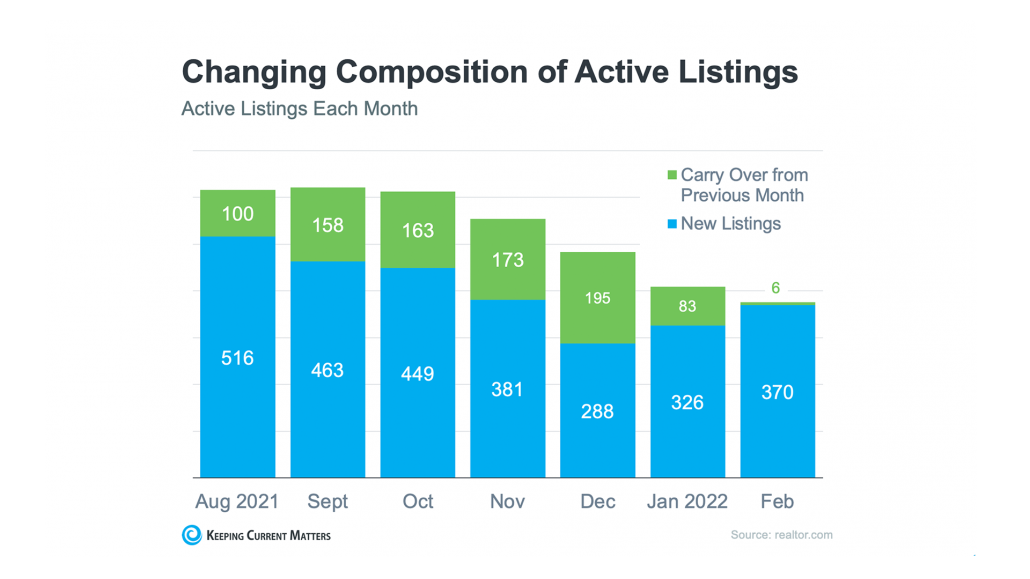
WILL WE SEE MORE INVENTORY THIS SPRING?

For the last number of decades, the real estate market has been broken down into seasons with spring reigning as the best time to sell a home. Traditionally, that’s how it’s been. But there’s a big shift happening now.

Recent years have seen that seasonality blur as more and more people decide to buy or sell a home no matter what time of year it is.

What we do know is that while we’ll probably see more homes hit the market this spring, supply is still too low to keep up with demand.

So, even if more homes do come on the market compared to previous months, there are plenty of willing and ready buyers waiting on the sidelines to scoop them up.

WHY ARE PRICES RISING SO QUICKLY?

No one wants to buy at the top of the market. We saw how that played out in 2008, and it didn’t end well for a lot of homeowners.

But according to recent expert projections, we aren’t at the top of the market.

But before we dive a little deeper into that, we need to explain a couple of things.

First, with both Millenials and Gen Z now in the buyer group, there isn’t enough existing inventory to keep up with the amount of aspiring homeowners. Second, we didn’t build enough homes in the last decade to keep up with the demand.

This leads us directly to our next big question.

SHOULD I WAIT TO BUY UNTIL PRICES GO DOWN?

So, with existing inventory not being able to keep up with the number of buyers looking to own a home, we are seeing price appreciation that looks strikingly similar to what we saw in the years leading up to the crash.

The big difference between now and then is this: this price appreciation is a direct result of low inventory and high demand. Not high inventory and high demand like in the early 2000s.

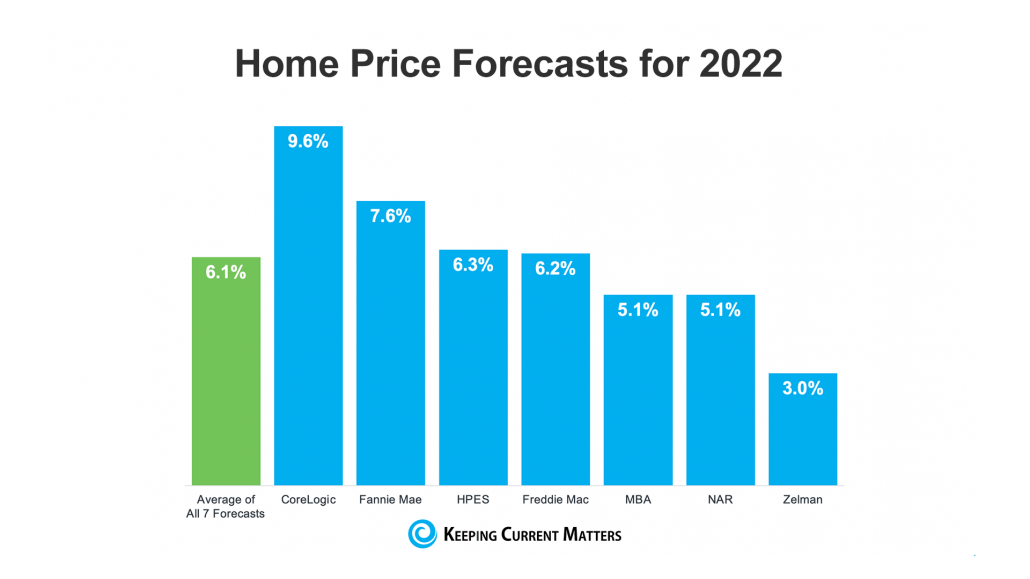
Plus, earlier projections by top industry experts are already being revised to higher than originally anticipated. That means more likely than not, we could see another year of above-average price appreciation.

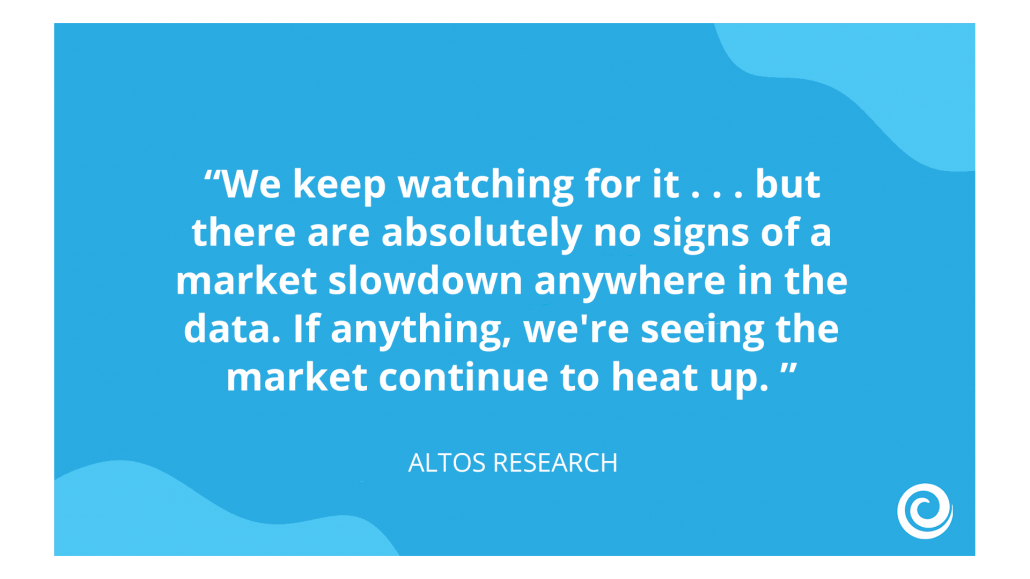
Altos research quote

HOW WILL RISING INFLATION IMPACT THE HOUSING MARKET?

Inflation: one of the most unfortunate results of the pandemic. And there have obviously been many (let’s never forget the infamous toilet paper shortage).

But inflation isn’t new. And if we look all the way back to 1970, we actually see one big takeaway: homeownership is historically a great hedge against it.

For example, as rental prices continue to rise nationwide, locking in mortgage payments can keep your largest monthly cost the same. remain the same.

Another big takeaway: home price appreciation has outperformed inflation for decades.

So, if you are worried about how today’s inflation may affect the housing market : at the very least, data shows that historically real estate has outperformed inflation.

SHOULD I WAIT UNTIL PRICES GO DOWN TO BUY?

Like we covered above, industry experts are projecting that prices will only go up from here (and that’s not likely to change anytime soon).

There are many benefits to homeownership. But the biggest one you need to consider right now is that it’s consistently been voted the best long-term investment a person can make in their life.

And waiting for the market to cool off or prices to go down means only one thing: paying more for the exact same house. Especially as experts project mortgage rates will continue to rise.

The best advice I can give to those who are hesitant to hop into this hot market is this: you can wait, but it will probably cost you.

Bottom Line

If you have questions about this market, I am here to be your trusted resource. Let’s at least have a conversation about your situation and see if I can be of service.

Lesley Lambert, Western MA REALTOR with Park Square Realty 413-575-3611

source credit: https://www.keepingcurrentmatters.com/article/the-biggest-questions-clients-are-asking-this-spring/?utm_campaign=2203_5_Slides&utm_medium=email&utm_source=email-broadcast&utm_content=Blog_Digest&utm_term=agent_article&source=

Written by Lesley Lambert · Categorized: Uncategorized

Mar 10 2022

Hedge Against Inflation With These 3 Real Estate Investment Types

Hedge Against Inflation With These 3 Real Estate Investment Types

The annual inflation rate in the United States is currently around 7.5%—the highest it has been since 1982.1 It doesn’t matter if you’re a cashier, lawyer, plumber, or retiree; if you spend U.S. dollars, inflation impacts you.

Economists expect the effects of inflation, like a higher cost of goods, to continue.2 Luckily, an investment in real estate can ease some of the financial strain.

Here’s what you need to know about inflation, how it impacts you, and how an investment in real estate can help.

WHAT IS INFLATION AND HOW DOES IT IMPACT ME?

Inflation is a decline in the value of money. When the rate of inflation rises, prices for goods and services go up. Therefore, a dollar buys you a little bit less with every passing day.

The consumer price index, or CPI, is a standard measure of inflation. Based on the latest CPI data, prices increased 7.5% from January 2021 to January 2022.1 A little bit of inflation is considered healthy for the economy, but 7.5% in a single year is high.

How does inflation affect your life? Here are a few of the negative impacts:

  • Decreased Purchasing Power

We touched on this already, but as prices rise, your dollar won’t stretch as far as it used to. That means you’ll be able to purchase fewer goods and services with a limited budget.

  • Increased Borrowing Costs

In an effort to curb inflation, the Federal Reserve is expected to raise the federal funds rate. Therefore, consumers are likely to pay a higher interest rate on new mortgages, car loans, and variable-rate credit cards.3

  • Lower Standard of Living

Wage growth tends to lag behind price increases. According to Moody Analytics, when adjusted for inflation, average weekly earnings in January were down 3.1% from a year earlier.4 As such, life is becoming less affordable for everyone. Inflation can force those on a fixed income, like retirees, to make lifestyle changes and prioritize essentials.

  • Eroded Savings

If you store all your savings in a bank account, inflation is even more damaging. As of February 2022, the national average interest rate for a savings account is 0.06%, not nearly enough to keep up with inflation. And economists don’t expect that rate to go much higher.3

One of the best ways to mitigate these effects is to find a place to invest your money other than the bank. Even though interest rates are expected to rise, they’re unlikely to get high enough to beat inflation. If you hoard cash, the value of your money will decrease every year and more rapidly in years with elevated inflation.

REAL ESTATE: A PROVEN HEDGE AGAINST INFLATION

So where is a good place to invest your money to protect (hedge) against the impacts of inflation? There are several investment vehicles that financial advisors traditionally recommend, including:

  • Stocks

Some people invest in stocks as their primary inflation hedge. However, the stock market can become volatile during inflationary times, as we’ve seen in recent months.5

  • Commodities

Commodities are tangible assets, like oil, livestock, and minerals. The theory is that the price of commodities should climb alongside inflation. But the classic choice–gold–hasn’t risen consistently during periods of inflation since the 1970s, according to data from Morningstar Direct.6

  • Inflation-Indexed Bonds

Treasury inflation-protected securities, or TIPS, are U.S. government-issued bonds that are indexed to the inflation rate. Bonds are considered low risk, but the returns they offer are generally low, as well.7

  • Real Estate
    Real estate prices across the board tend to rise along with inflation and often rise faster than inflation.8 That’s one of the reasons demand for real estate is soaring right now.9

We believe real estate is the best hedge against inflation. Owning real estate does more than protect your wealth—it can actually make you money. For example, home prices rose nearly 17% from 2020 to 2021, 10% ahead of the 7% inflation that occurred in the same timeframe.10 

Plus, certain types of real estate investments can help you generate a stream of passive income. In the past year, property owners didn’t just avoid the erosion of purchasing power caused by inflation; they got ahead.

TYPES OF REAL ESTATE INVESTMENTS

Though there are myriad ways to invest in real estate, there are three basic investment types that we recommend for beginner and intermediate investors. Remember that we can help you determine which options are best for your financial goals and budget.

  • Primary Residence

If you own your home, you’re already ahead. The advantages of homeownership become even more apparent in inflationary times. As inflation raises prices throughout the economy, the value of your home is likely to go up concurrently. At the same time, you’ve locked in a set mortgage payment for the next 30 years, so you’ll be immune to rising rental costs.

If you don’t already own your primary residence, homeownership is a worthwhile goal to pursue.

Though the task of saving enough for a down payment may seem daunting, there are several strategies that can make homeownership easier to achieve. If you’re not sure how to get started with the home buying process, contact us. Our team can help you find the strategy and property that fits your needs and budget.

Whether you already own a primary residence or are still renting, now is a good time to also start thinking about an investment property. The types of investment properties you’ll buy as a solo investor generally fall into two categories: long-term rentals and short-term rentals.

  • Long-Term (Traditional) Rentals

A long-term or traditional rental is a dwelling that’s leased out for an extended period. An example of this is a single-family home where a tenant signs a one-year lease and brings all their own furniture.

Long-term rentals are a form of housing. For most tenants, the rental serves as their primary residence, which means it’s a necessary expense. This unique quality of long-term rentals can help to provide stable returns in uncertain times, especially when we have high inflation.

To invest in a long-term rental, you’ll need to budget for maintenance, repairs, property taxes, and insurance. You’ll also need to have a plan for managing the property. But a well-chosen investment property should pay for itself through rental income, and you’ll benefit from appreciation as the property rises in value.

We can help you find an ideal long-term rental property to suit your budget and investment goals. Reach out to talk about your needs and our local market opportunities.

  • Short-Term (Vacation) Rentals

Short-term or vacation rentals function more like hotels in that they offer temporary accommodations. A short-term rental is defined as a residential dwelling that is rented for 30 days or less. The furniture and other amenities are provided by the property owner, and today many short-term rentals are listed on websites like Airbnb and Vrbo.

A short-term rental can potentially earn you a higher return than a long-term rental, but this comes at the cost of daily, hands-on management. With a short-term rental, you’re not just entering the real estate business; you’re entering the hospitality business, too.

Done right, short-term rentals can be both a hedge against inflation and a profitable source of income. As a bonus, when the home isn’t being rented you have an affordable vacation spot for yourself and your family!

Contact us today if you’re interested in exploring options in either the long-term or short-term rental market. Mortgage rates are expected to rise, so you’ll want to act fast to maximize your investment return.

I AM INVESTED IN HELPING YOU

Inflation is a fact of life in the U.S. economy. Luckily, you can prepare for inflation with a carefully managed investment portfolio that includes real estate. Owning a primary residence or investing in a short-term or long-term rental will help you both mitigate the effects of inflation and grow your net worth, which makes it a strategic move in our current financial environment.

If you’re ready to invest in real estate to build wealth and protect yourself from rising inflation, contact me. Our team can help you find a primary residence or investment property that meets your financial goals.

Lesley Lambert, Western MA REALTOR with Park Square Realty. 413-575-3611

Hedge Against Inflation With These 3 Real Estate Investment Types from Lesley Lambert

The above references an opinion and is for informational purposes only.  It is not intended to be financial advice. Consult the appropriate professionals for advice regarding your individual needs.

Sources:

  1. Bloomberg –
    https://www.bloomberg.com/news/articles/2022-02-10/u-s-inflation-charges-higher-with-larger-than-forecast-gain
  2. CNN –
    https://www.cnn.com/2022/01/01/economy/inflation-prices-2022-preview/index.html
  3. CNBC –
    https://www.cnbc.com/2022/01/26/the-fed-sets-the-stage-for-a-rate-hike-heres-what-that-means-for-you.html
  4. Reuters –
    https://www.reuters.com/business/us-consumer-prices-rise-strongly-january-weekly-jobless-claims-fall-2022-02-10/
  5. NBC News –
    https://www.nbcnews.com/business/markets/market-slide-dow-falls-700-points-sp-enters-correction-territory-rcna13304
  6. CNBC –
    https://www.cnbc.com/2021/12/20/gold-is-losing-its-status-as-an-inflation-hedge-two-traders-warn.html
  7. Morningstar –
    https://www.morningstar.com/articles/1079158/why-are-inflation-protected-bond-funds-losing-money
  8. The Washington Post –
    https://www.washingtonpost.com/business/2022/01/04/heres-how-inflation-could-affect-your-next-real-estate-move/
  9. Bloomberg –
    https://www.bloomberg.com/news/articles/2022-01-24/is-real-estate-a-good-investment-hedge-against-inflation-what-the-experts-say
  10. CNN –
    https://www.cnn.com/2022/01/20/homes/us-nar-home-sales-december-and-2021/index.html

Written by Lesley Lambert · Categorized: Market Reports, Uncategorized · Tagged: 01085, agawam, Business and Economy, buying a home, home for sale, home ownership, house, ma, market report, pioneer valley, realtor, Southwick Massachusetts, Towns of Western Massachusetts, Westfield, Westfield Massachusetts, Westfield REALTOR

Mar 07 2022

4 Graphs that demonstrate why this is NOT a housing bubble

A recent survey revealed that many consumers believe there’s a housing bubble beginning to form. That feeling is understandable, as year-over-year home price appreciation is still in the double digits. However, this market is very different than it was during the housing crash 15 years ago. Here are four key reasons why today is nothing like the last time.

1. Houses Are Not Unaffordable Like They Were During the Housing Boom

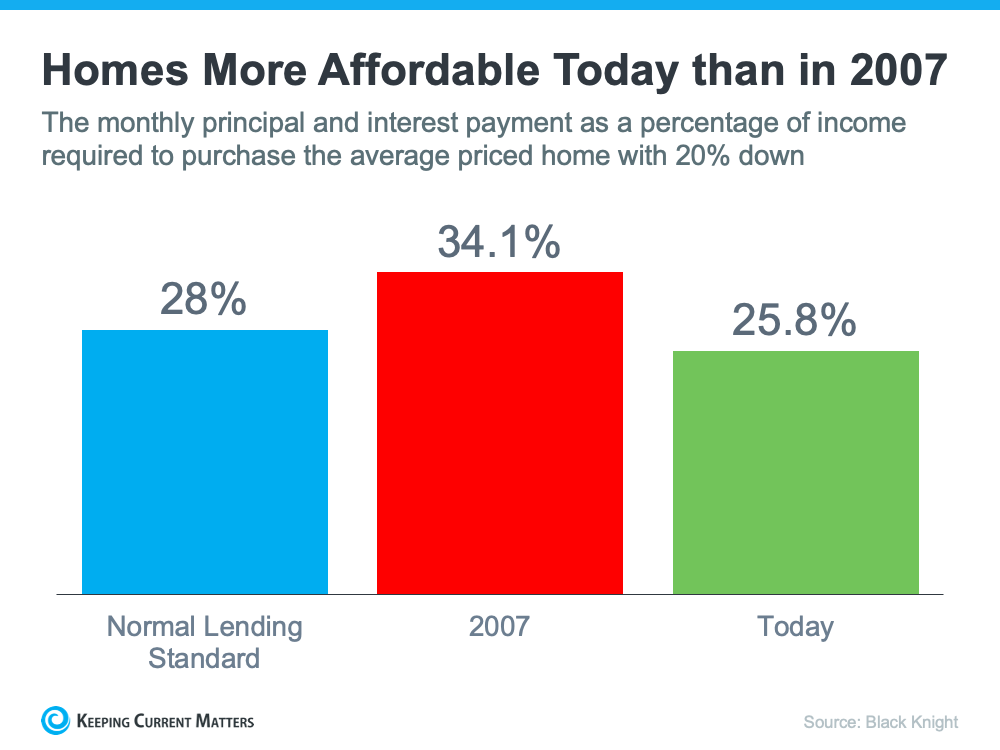
The affordability formula has three components: the price of the home, wages earned by the purchaser, and the mortgage rate available at the time. Conventional lending standards say a purchaser should not spend more than 28% of their gross income on their mortgage payment.

Fifteen years ago, prices were high, wages were low, and mortgage rates were over 6%. Today, prices are still high. Wages, however, have increased, and the mortgage rate, even after the recent spike, is still well below 6%. That means the average purchaser today pays less of their monthly income toward their mortgage payment than they did back then.

In the latest Affordability Report by ATTOM Data, Chief Product Officer Todd Teta addresses that exact point:

“The average wage earner can still afford the typical home across the U.S., but the financial comfort zone continues shrinking as home prices keep soaring and mortgage rates tick upward.”

Affordability isn’t as strong as it was last year, but it’s much better than it was during the boom. Here’s a chart showing that difference:

4 Simple Graphs Showing Why This Is Not a Housing Bubble | Keeping Current Matters

If costs were so prohibitive, how did so many homes sell during the housing boom?

2. Mortgage Standards Were Much More Relaxed During the Boom

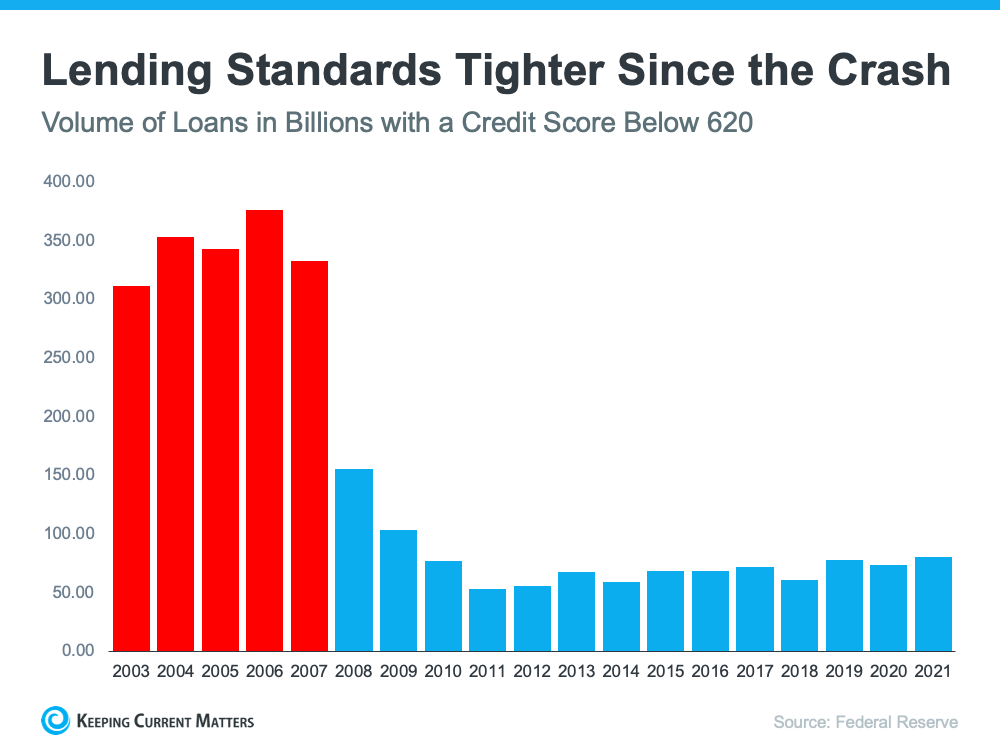
During the housing bubble, it was much easier to get a mortgage than it is today. As an example, let’s review the number of mortgages granted to purchasers with credit scores under 620. According to credit.org, a credit score between 550-619 is considered poor. In defining those with a score below 620, they explain:

“Credit agencies consider consumers with credit delinquencies, account rejections, and little credit history as subprime borrowers due to their high credit risk.”

Buyers can still qualify for a mortgage with a credit score that low, but they’re considered riskier borrowers. Here’s a graph showing the mortgage volume issued to purchasers with a credit score less than 620 during the housing boom, and the subsequent volume in the 14 years since.

4 Simple Graphs Showing Why This Is Not a Housing Bubble | Keeping Current Matters

Mortgage standards are nothing like they were the last time. Purchasers that acquired a mortgage over the last decade are much more qualified. Let’s take a look at what that means going forward.

3. The Foreclosure Situation Is Nothing Like It Was During the Crash

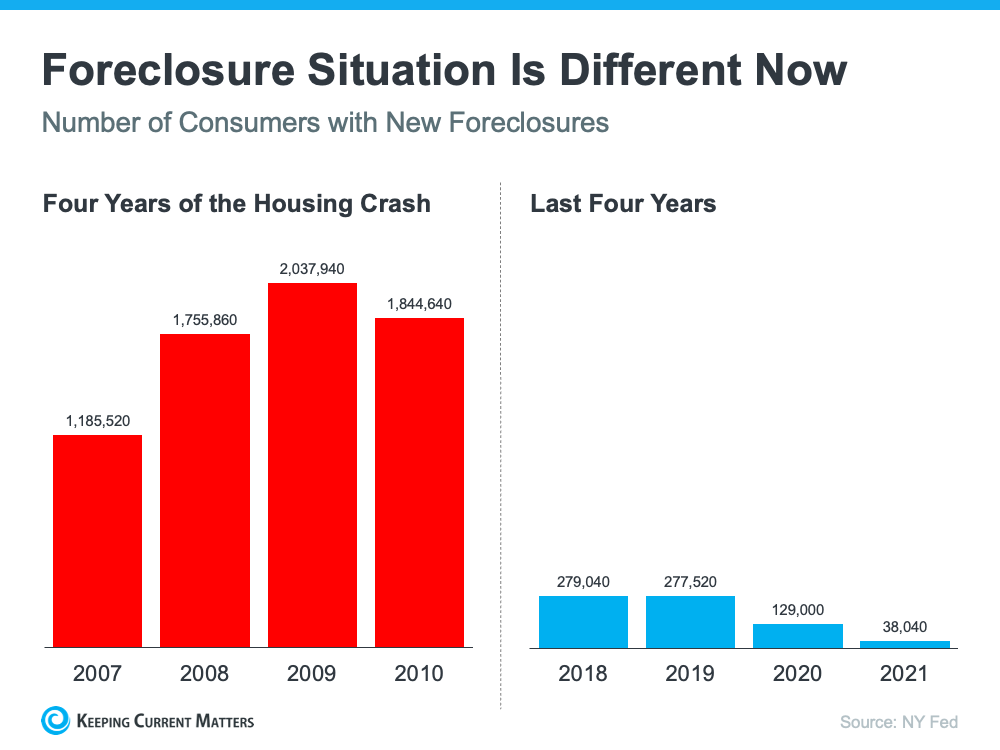
The most obvious difference is the number of homeowners that were facing foreclosure after the housing bubble burst. The Federal Reserve issues a report showing the number of consumers with a new foreclosure notice. Here are the numbers during the crash compared to today:

4 Simple Graphs Showing Why This Is Not a Housing Bubble | Keeping Current Matters

There’s no doubt the 2020 and 2021 numbers are impacted by the forbearance program, which was created to help homeowners facing uncertainty during the pandemic. However, there are fewer than 800,000 homeowners left in the program today, and most of those will be able to work out a repayment plan with their banks.

Rick Sharga, Executive Vice President of RealtyTrac, explains:

“The fact that foreclosure starts declined despite hundreds of thousands of borrowers exiting the CARES Act mortgage forbearance program over the last few months is very encouraging. It suggests that the ‘forbearance equals foreclosure’ narrative was incorrect.”

Why are there so few foreclosures now? Today, homeowners are equity rich, not tapped out.

In the run-up to the housing bubble, some homeowners were using their homes as personal ATM machines. Many immediately withdrew their equity once it built up. When home values began to fall, some homeowners found themselves in a negative equity situation where the amount they owed on their mortgage was greater than the value of their home. Some of those households decided to walk away from their homes, and that led to a rash of distressed property listings (foreclosures and short sales), which sold at huge discounts, thus lowering the value of other homes in the area.

Homeowners, however, have learned their lessons. Prices have risen nicely over the last few years, leading to over 40% of homes in the country having more than 50% equity. But owners have not been tapping into it like the last time, as evidenced by the fact that national tappable equity has increased to a record $9.9 trillion. With the average home equity now standing at $300,000, what happened last time won’t happen today.

As the latest Homeowner Equity Insights report from CoreLogic explains:

“Not only have equity gains helped homeowners more seamlessly transition out of forbearance and avoid a distressed sale, but they’ve also enabled many to continue building their wealth.”

There will be nowhere near the same number of foreclosures as we saw during the crash. So, what does that mean for the housing market?

4. We Don’t Have a Surplus of Homes on the Market – We Have a Shortage

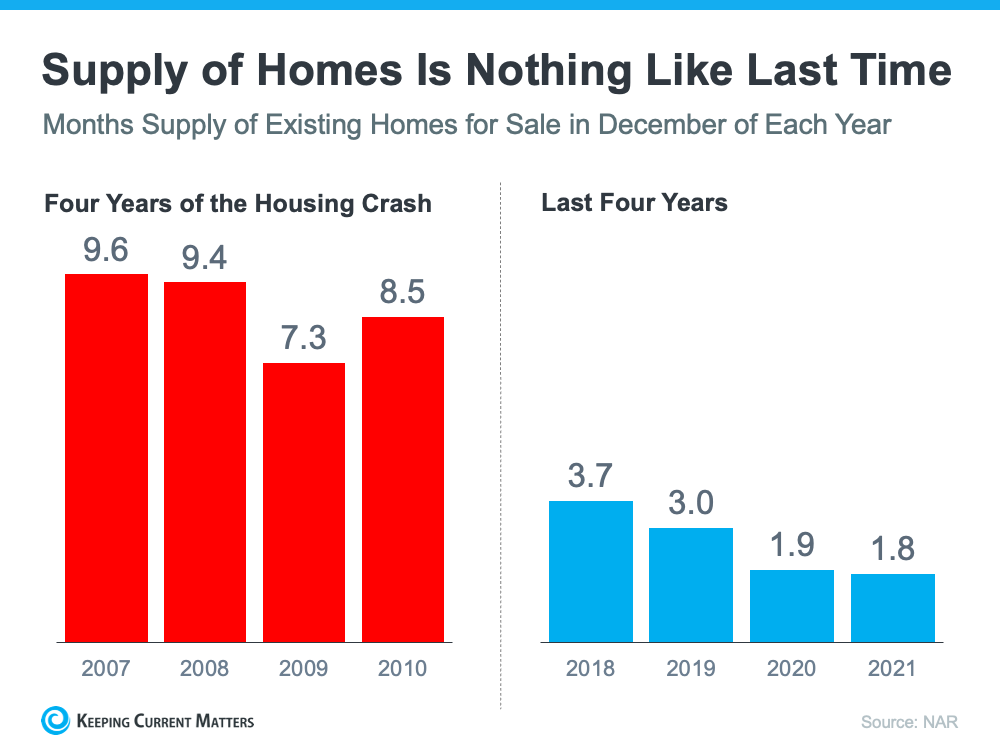
The supply of inventory needed to sustain a normal real estate market is approximately six months. Anything more than that is an overabundance and will causes prices to depreciate. Anything less than that is a shortage and will lead to continued price appreciation. As the next graph shows, there were too many homes for sale from 2007 to 2010 (many of which were short sales and foreclosures), and that caused prices to tumble. Today, there’s a shortage of inventory, which is causing the acceleration in home values to continue.

4 Simple Graphs Showing Why This Is Not a Housing Bubble | Keeping Current Matters

Inventory is nothing like the last time. Prices are rising because there’s a healthy demand for homeownership at the same time there’s a shortage of homes for sale.

Bottom Line

If you’re worried that we’re making the same mistakes that led to the housing crash, the graphs above show data and insights to help alleviate your concerns.

Lesley Lambert, Western MA REALTOR with Park Square Realty Call/text: 413-575-3611. Email: realestate.lesleylambert@gmail.com

source:https://www.keepingcurrentmatters.com/2022/02/17/4-simple-graphs-showing-why-this-is-not-a-housing-bubble/?utm_campaign=Blog_Promo&utm_content=DailyBlog&utm_medium=social&utm_source=facebook&hss_channel=fbp-295788075627

Written by Lesley Lambert · Categorized: Uncategorized · Tagged: 01085, Business and Economy, holyoke, home ownership, lesley lambert, listing, listings, market, market report, park square realty, pioneer valley, real estate, selling, Selling Your Home, southwick, Southwick Massachusetts, Towns of Western Massachusetts, west springfield, Westfield REALTOR

  • « Go to Previous Page
  • Page 1
  • Interim pages omitted …
  • Page 9
  • Page 10
  • Page 11
  • Page 12
  • Page 13
  • Interim pages omitted …
  • Page 199
  • Go to Next Page »

Primary Sidebar

Recent Posts

  • Why Homes Come Back on the Market (And What It Actually Means)
  • What It’s Really Like to Live in Western Massachusetts (It’s Not What You Think)
  • 3 Bedroom Ranch for Sale in Westfield Massachusetts Near Columbia Greenway – 11 Laurel Terrace
  • Should You Sell Your House Now? Western MA and Northwest CT Real Estate Market Update
  • New Listing in Stoney Hill Condominiums | 419 Southwick Rd, P66, Westfield, MA

Categories

  • Abouthom.es Girls
  • Decor Tips
  • Downsizing for Seniors
  • E-books
  • foreclosure
  • Guest Posts
  • Home Buying
  • Lesley's Life
  • Listings
  • Maintenance
  • Market Reports
  • Podcast: The Real Estate Ladies of Western MA
  • Selling during a divorce
  • Selling Your Home
  • Short Sale E-book
  • Short Sale/Foreclosure
  • Social Media
  • Southwick, MA
  • Testimonials
  • The Real Estate Ladies of Western MA Videos
  • The TREW Show
  • Towns of Western Massachusetts
  • Uncategorized
  • Various
  • Westfield

Footer

“Lesley”
Western MA Realtor- Lesley Lambert
413-575-361
Send Me A Text Message
Email Lesley
“logo”
Custom WordPress Site by 210 Consulting- Social Media Advisors